

system
Vocem Overlay
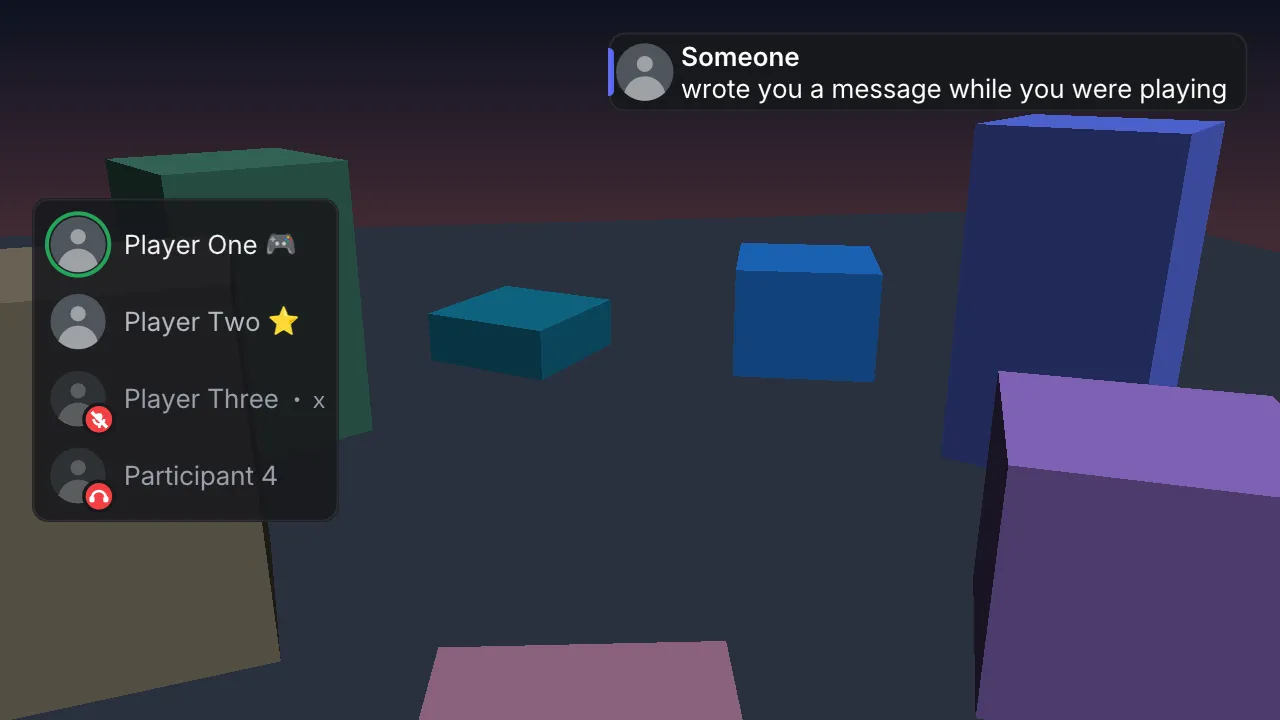
Shows who is in your Discord voice channel, who is speaking and the messages you receive, rendered into the game's own frame by a Vulkan implicit layer and an OpenGL interposer, so fullscreen can't hide it and no compositor is involved.
- GitHub stars
- 2
Background
On Windows, Discord draws its overlay inside games; on Linux it doesn’t. Window-based overlays get covered by exclusive fullscreen and depend on the compositor. Vocem draws directly into the frame the game renders.
How it gets into a game
- Vulkan: an implicit layer. The loader finds its manifest and loads it into every Vulkan application; the layer draws the panel on the swapchain image right before present.
- OpenGL / GLES: OpenGL has no layer mechanism, so a tiny 18 KB shim is preloaded through
environment.d(or per-game withvocem-run %command%in Steam) and interposes the swap call. - Flatpak games: sandboxed games see neither the host’s preload nor its layer manifests, so the project publishes its own Flatpak Vulkan layer extension for each freedesktop runtime branch. The daemon stays on the host and is reached through a directory Flatpak shares with the sandbox.
Both 32-bit and 64-bit games are covered, and both paths can be active at once.
Architecture
The project is split into separate modules with narrow responsibilities:
- vocemd: a user daemon that talks to Discord’s local RPC socket and owns voice and message state.
- layer / gl: the renderers loaded into the game process; they read state from the daemon and draw.
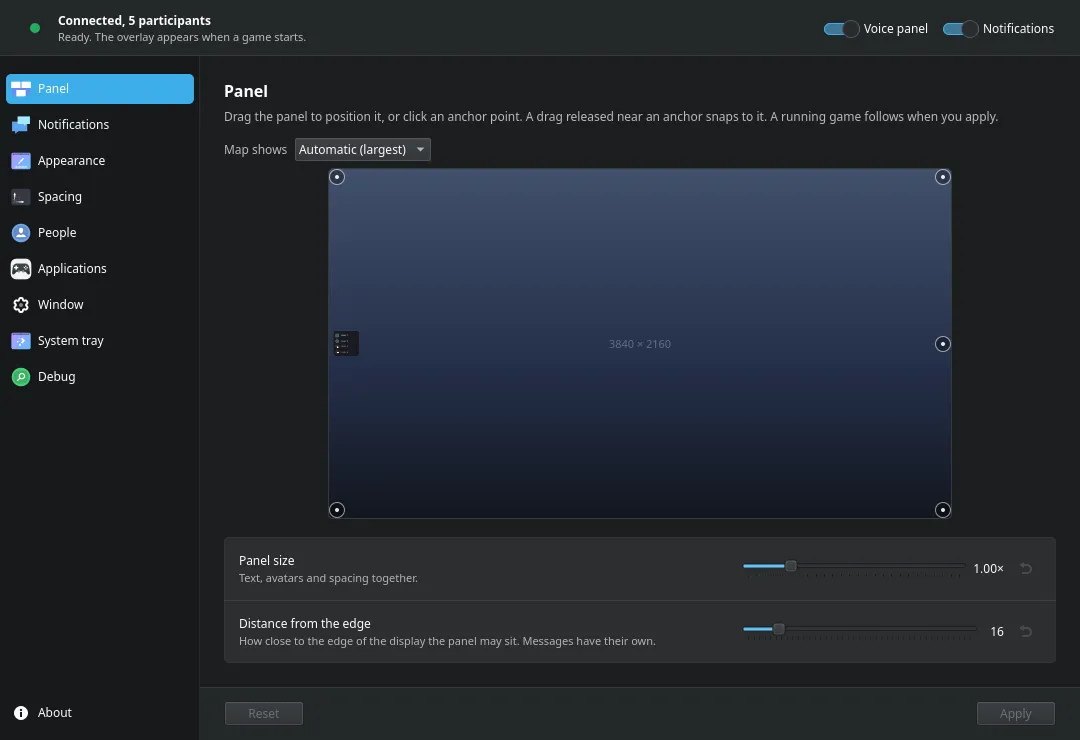
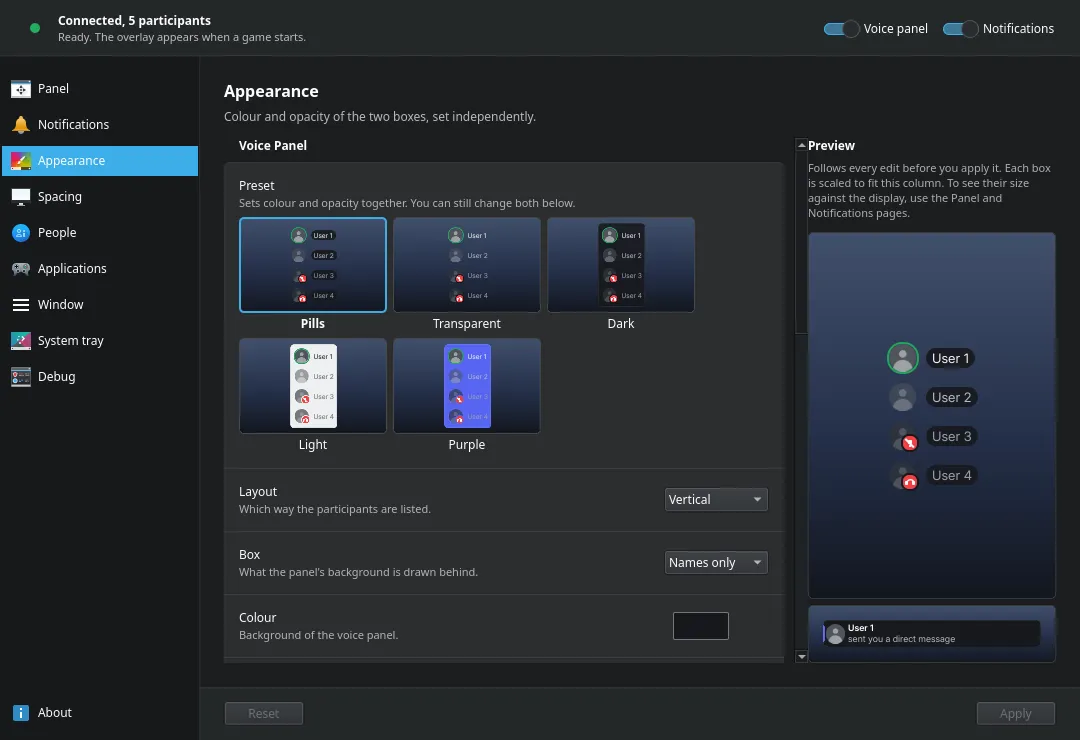
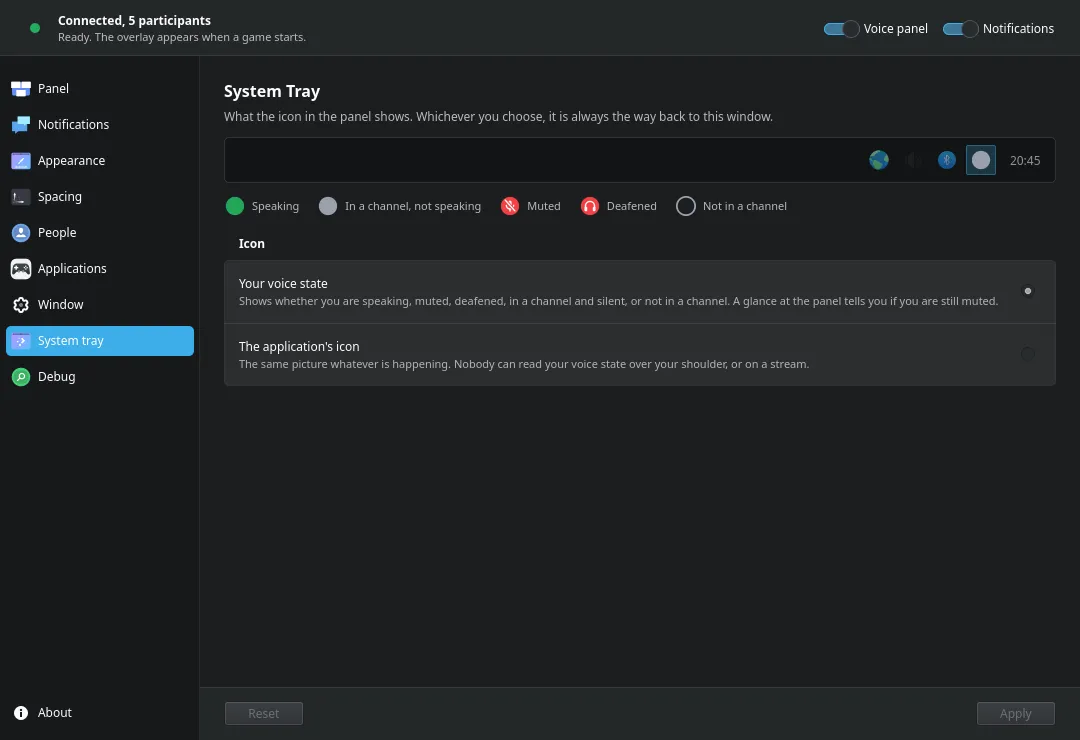
- gui: a Qt 6 / QML settings app; changes reach a running game within a couple of seconds.
- cli:
vocem-runandvocem-why, for launching games and diagnosing problems.
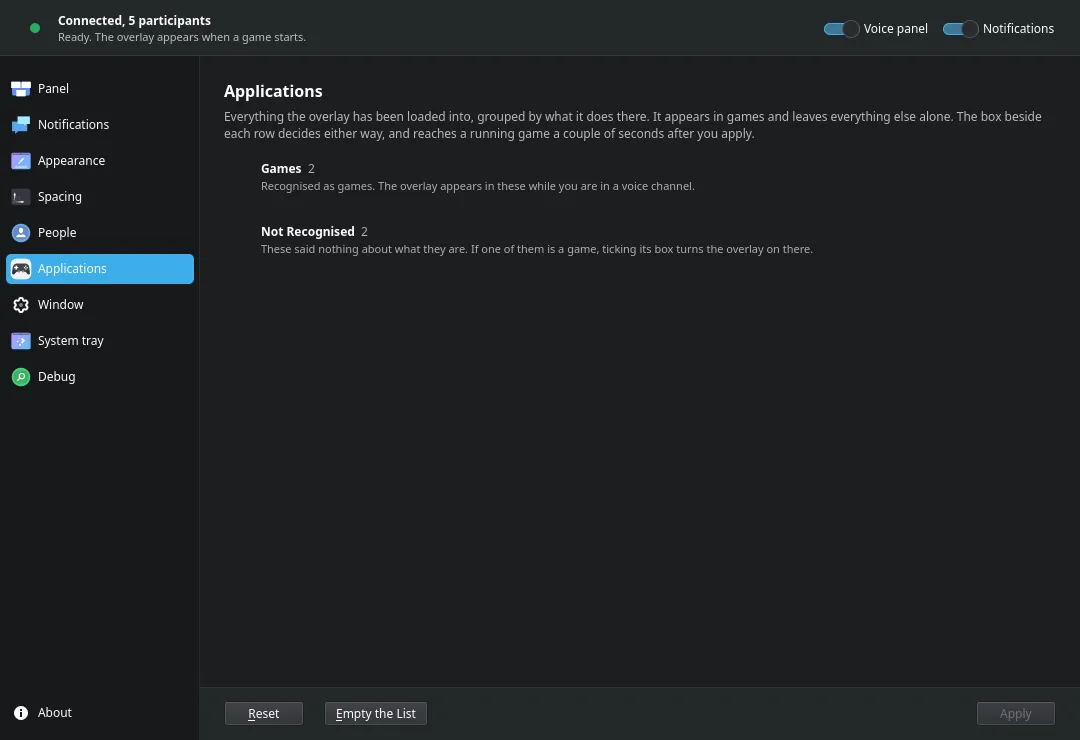
It only draws in games: it identifies them from launcher identifiers (Lutris, Heroic, Prism), Steam app ids, umu/gamescope hints and desktop entries. Each app can be switched on or off from the Applications page.
Details
- Sized by the display, not the game: a fixed fraction of the screen height, so it stays put when a game changes resolution.
- HDR aware: on HDR10 or scRGB swapchains the colours are encoded for the swapchain instead of blowing out.
- Full emoji and CJK in names, from fonts bundled in the binary.
- Packaging: an Arch
PKGBUILD, a rootless CMake install with a systemd user unit, and the Flatpak layer repository.
Settings app
Next project
dart_smb2
SMB2/3 client for Dart & Flutter, built on libsmb2.