
tool
MineSync
Synchronizes a Minecraft server folder, vanilla or modded (Forge, NeoForge, Fabric, Quilt), across the PCs of a group on a private ZeroTier network. A self-hosted hub stores every world with its full history; the client takes an exclusive lock, downloads only the files that changed, runs the server and uploads a new version every five minutes.
- GitHub stars
- 0
Background
A shared Minecraft world needs a host. A dedicated server adds cost and maintenance, and when the host is one member’s PC, the world is only available while that PC is on. MineSync lets any member of the group host: the world lives on a hub, and each session starts from its latest version.
Hosting a session
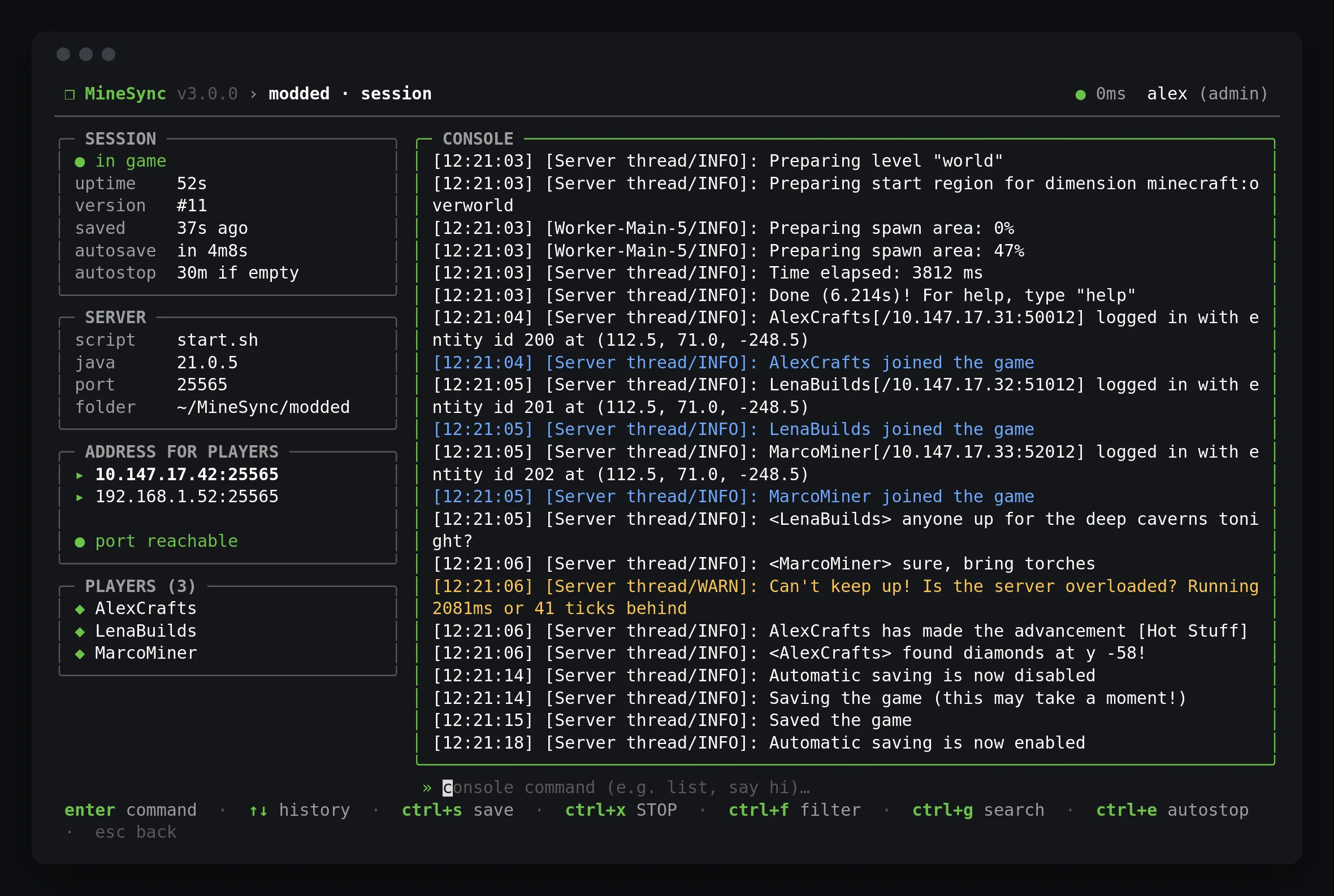
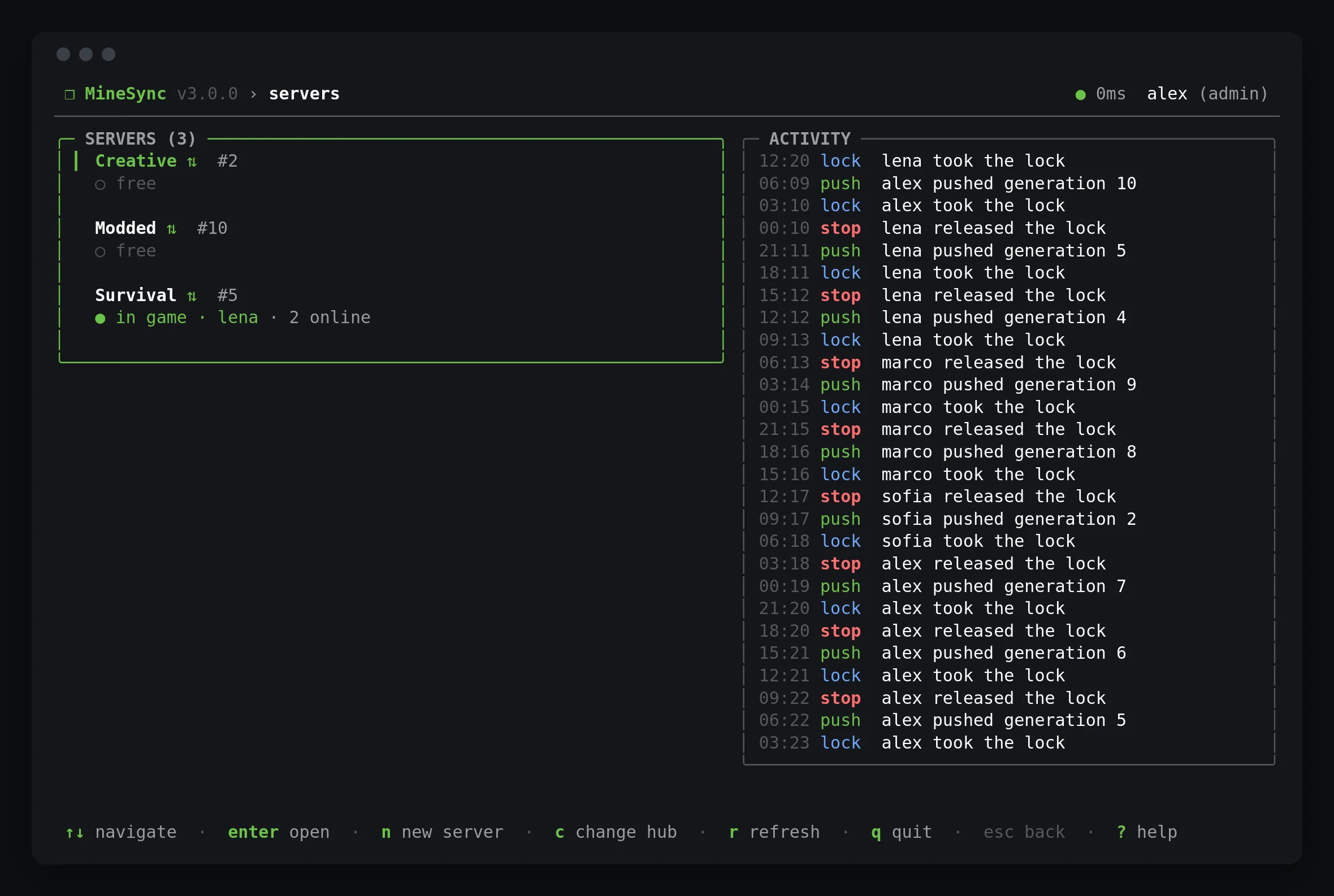
The client lists the servers on the hub. Starting one takes the lock, so only one member hosts at a time, then downloads the files that changed since the last session, selects a compatible Java runtime and starts the server with an embedded console. Every five minutes it saves the world and uploads a new version; stopping the server uploads the final state and releases the lock.
- Exclusive lock: kept alive by a heartbeat and released after 90 seconds if the host crashes.
- Local changes are preserved: changes that never reached the hub are uploaded first when that is safe, or kept in a backup if someone else has hosted since.
- Unattended operation: the server stops after 30 minutes with nobody online and restarts automatically after a crash, up to twice.
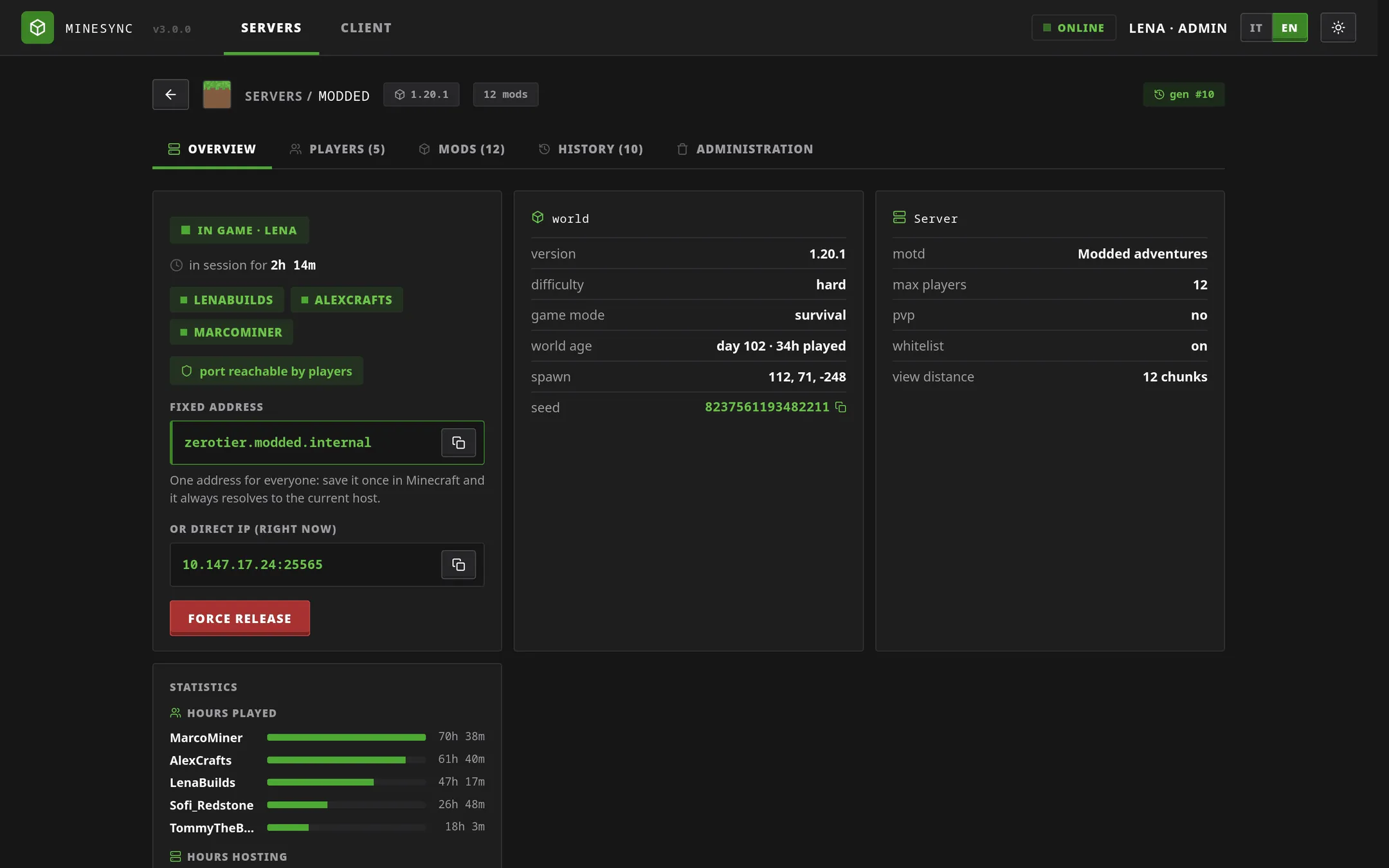
- Fixed address: the hub can serve DNS for
zerotier.<server>.internal, which resolves to the current host, so players keep one address in Minecraft.
The hub
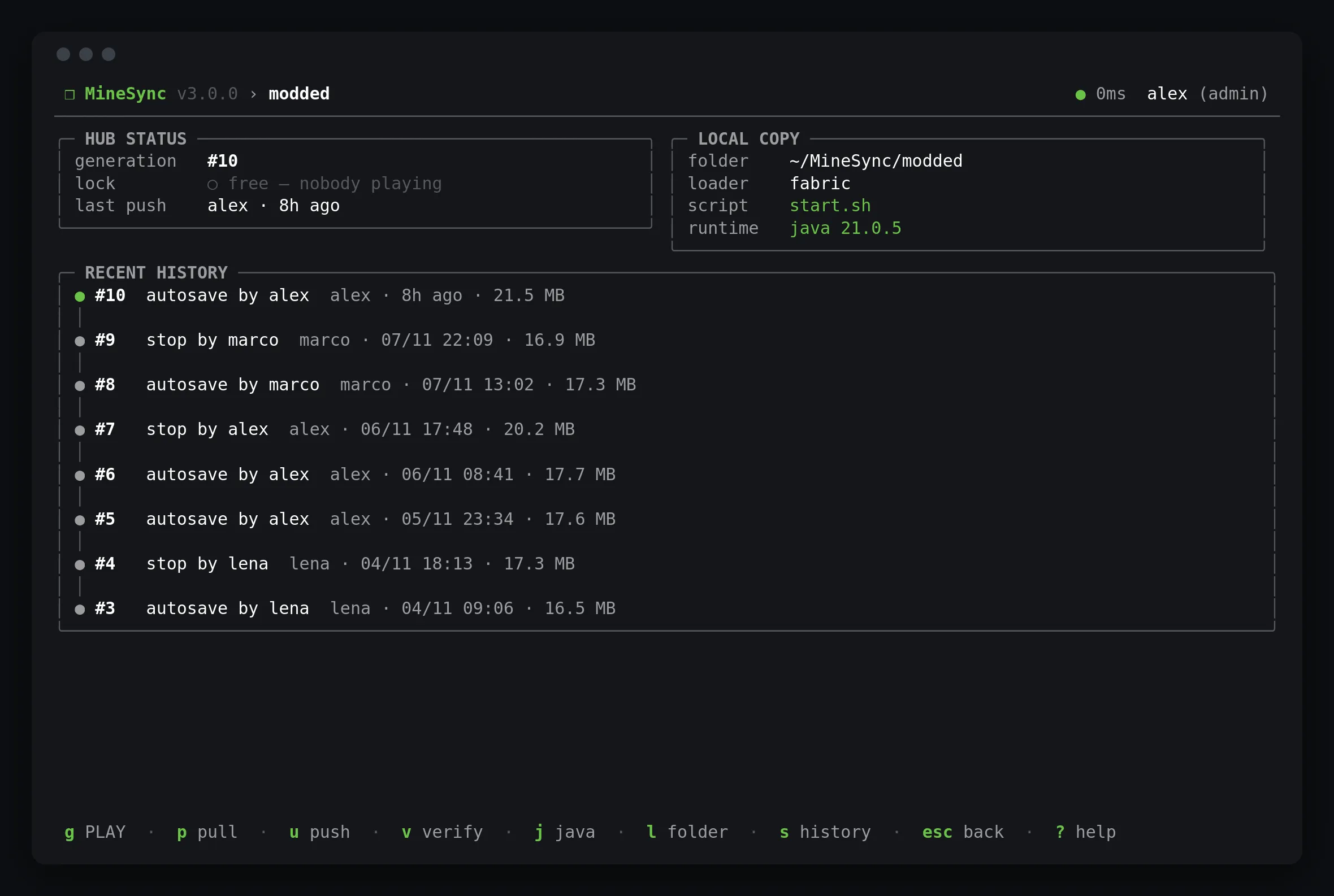
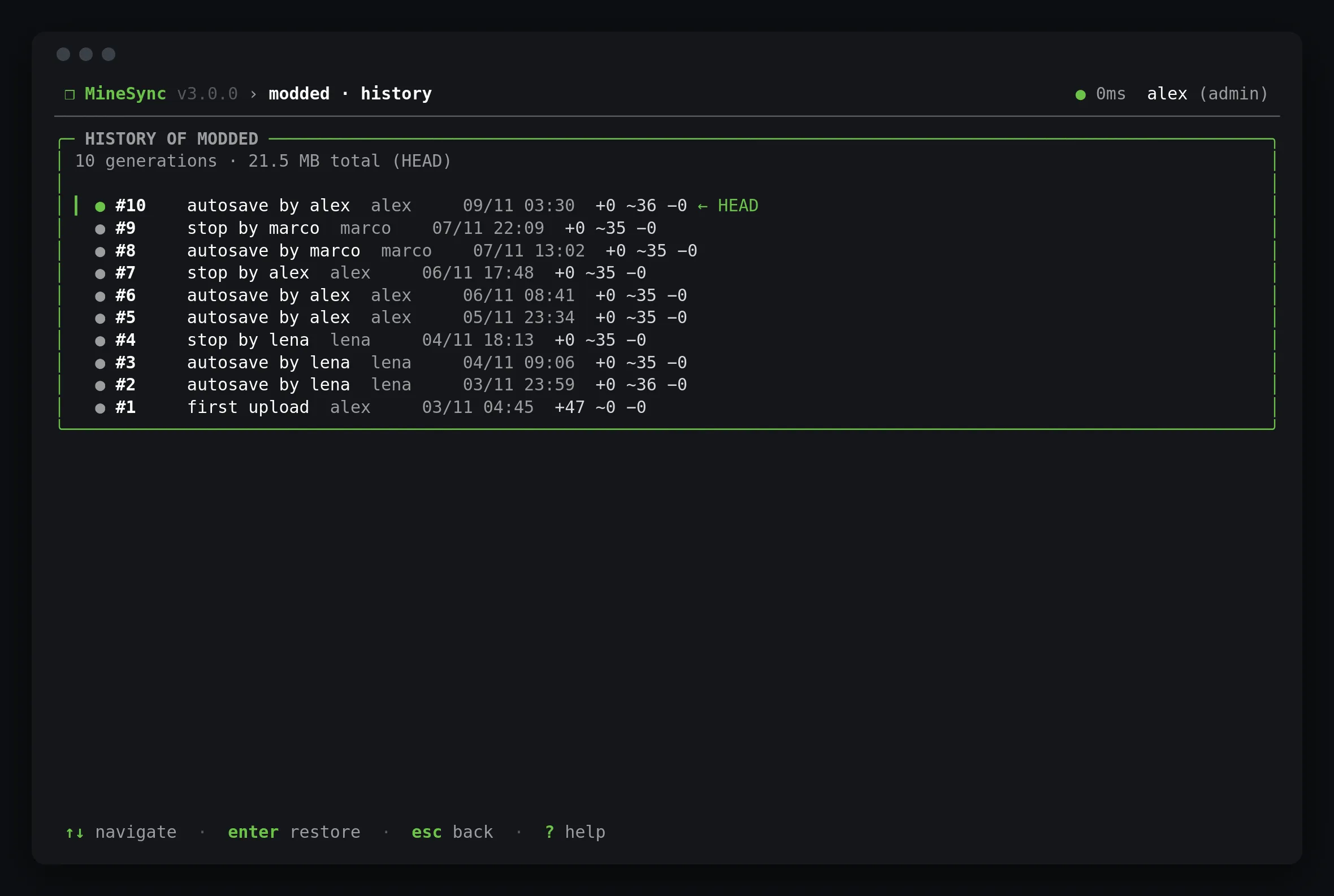
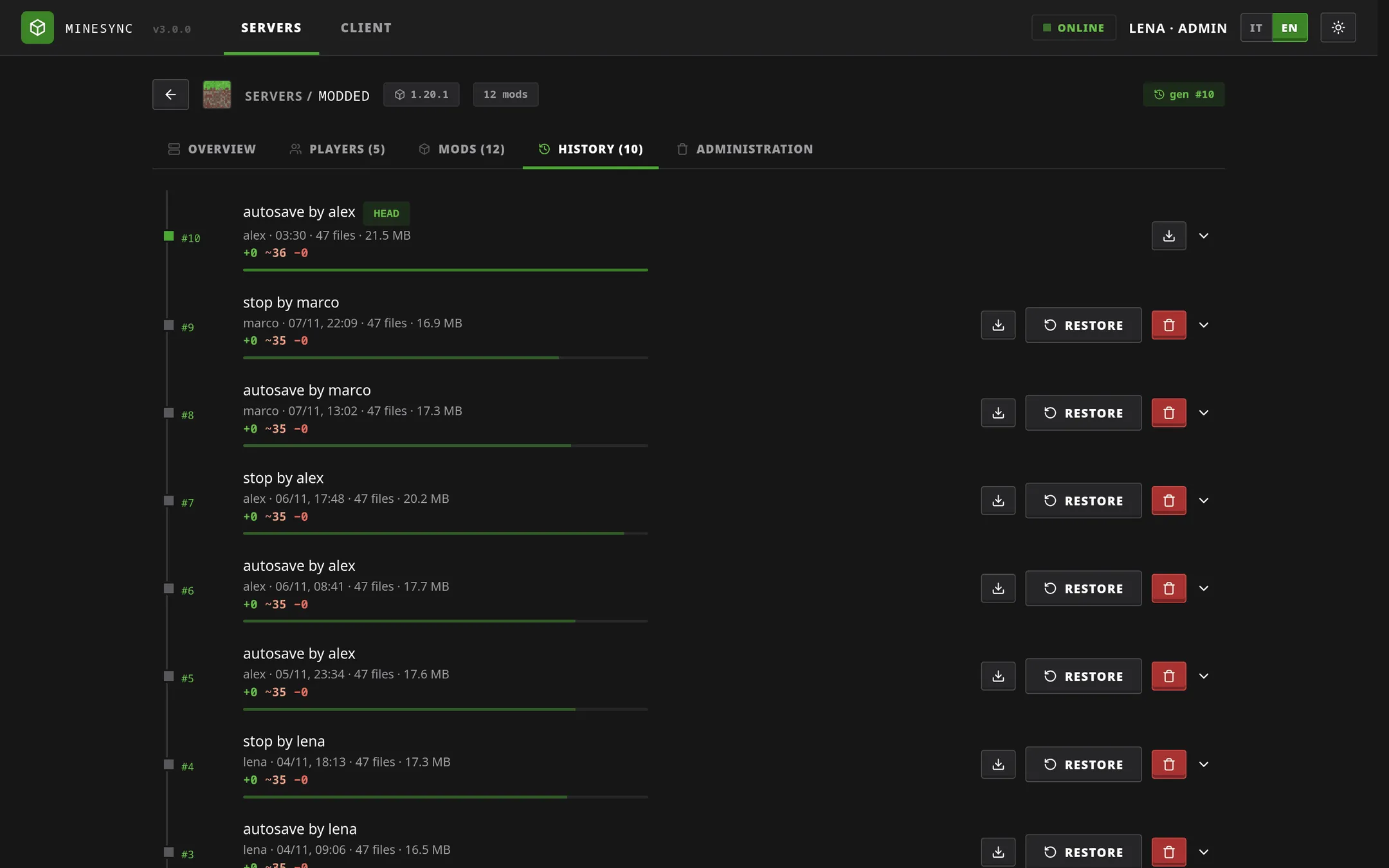
A single static Go binary, deployed as a Docker container on an always-on machine such as a NAS. Storage is content-addressed (SHA-256, with region files split into chunks), so each version stores only what changed. Any version can be restored, as a whole world or a single file, or exported as a ZIP. Automatic retention never removes the last 24 hours and keeps one version per day for a week.
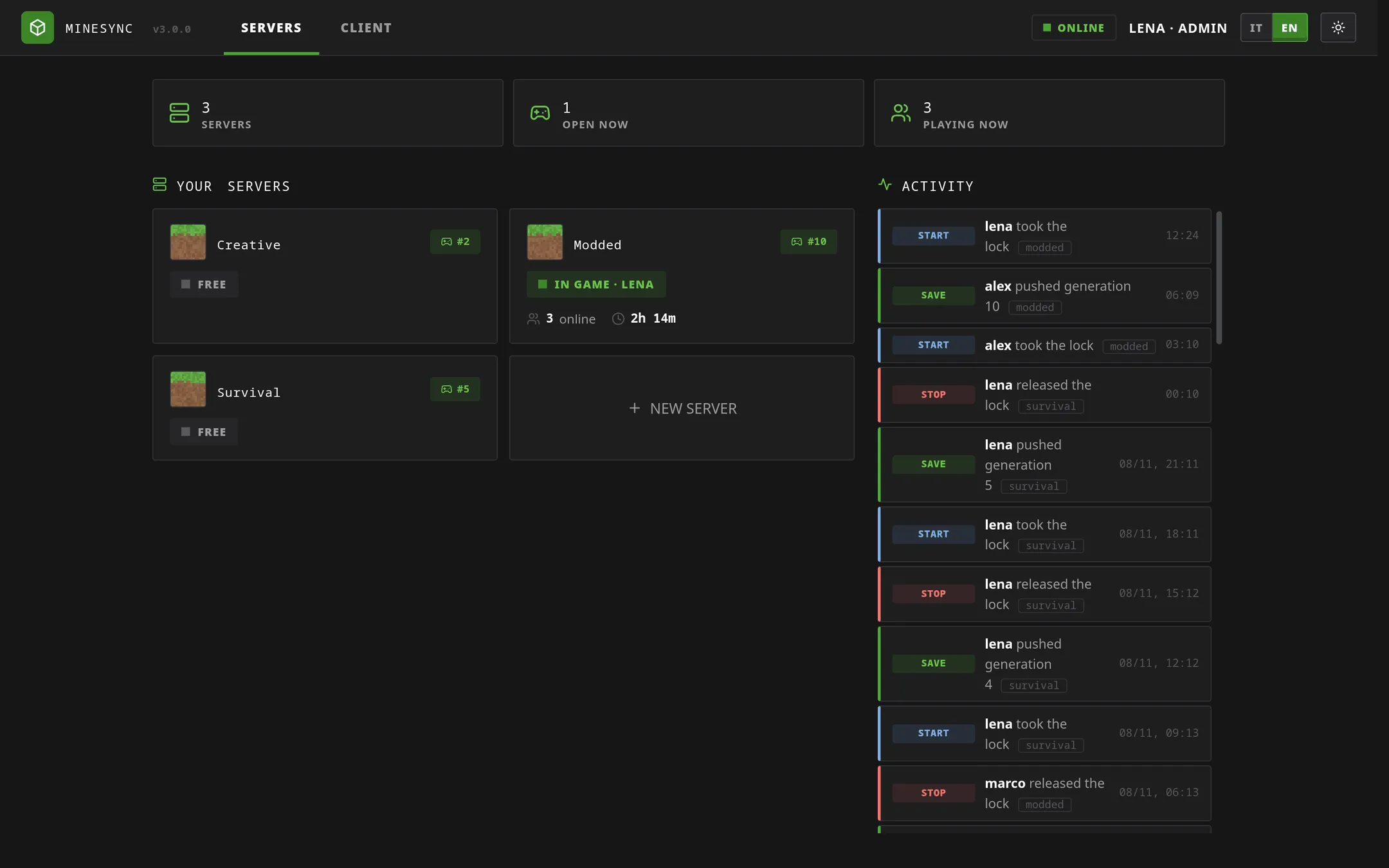
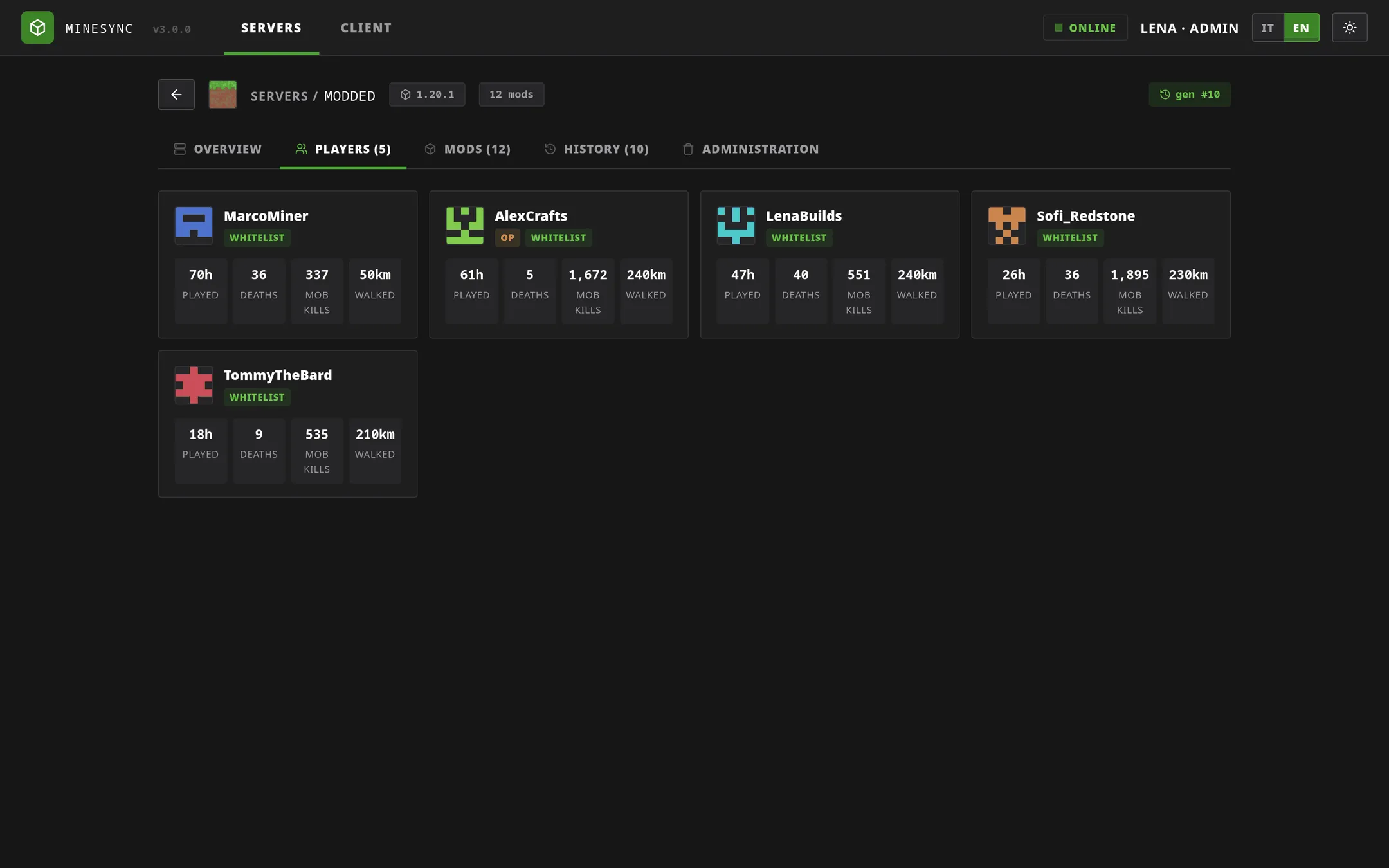
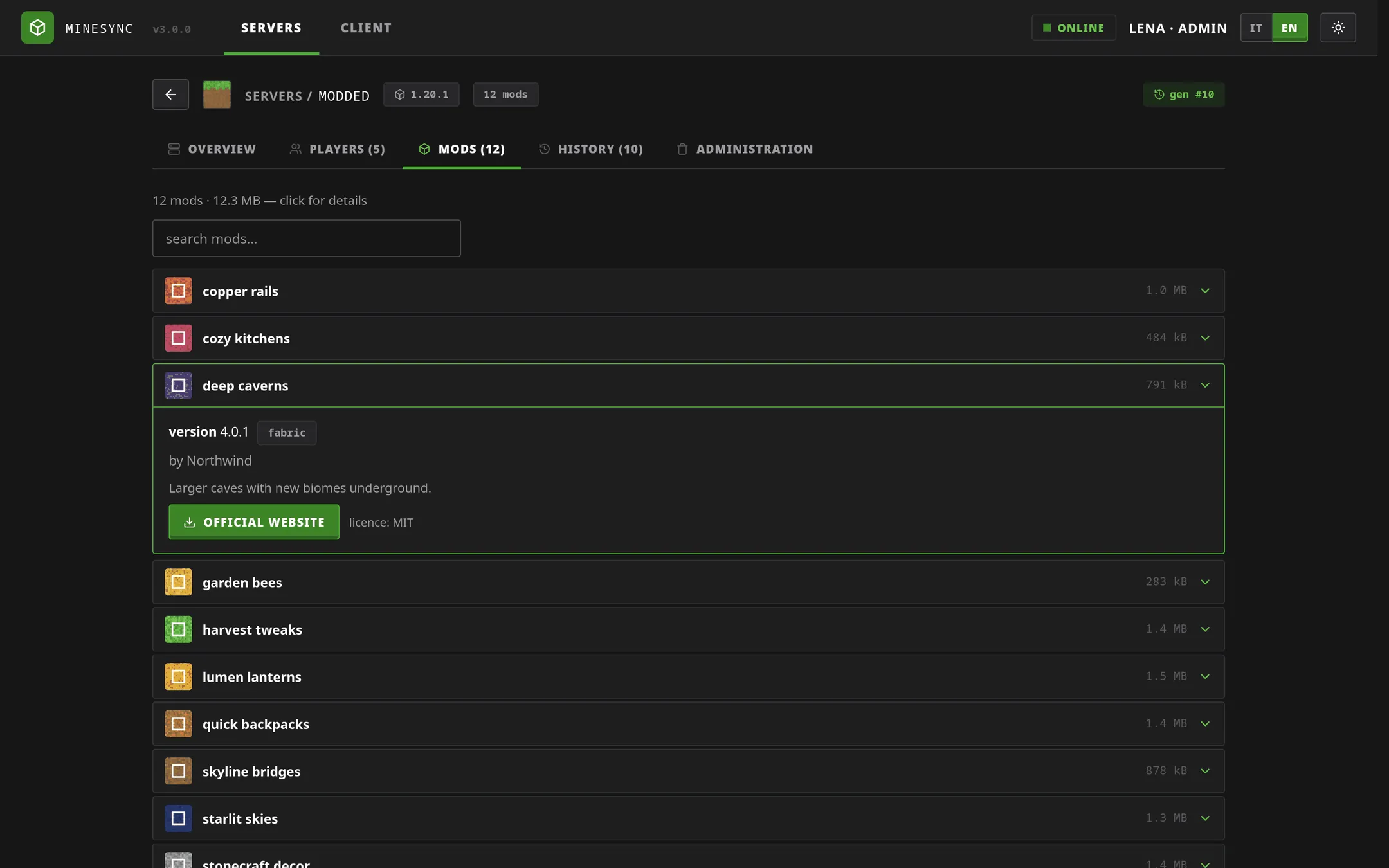
The web interface shows the current host and the address to join, world details, players, mods and the full history. The hub can also check that the host’s game port is reachable and post to Telegram when a server opens or closes.
Access and security
MineSync has no passwords or tokens of its own. The hub runs inside the ZeroTier container’s network and identifies each request through ZTNET, so access follows network membership: adding a player means authorizing them in ZTNET. The hub only coordinates sessions; game traffic goes directly between players and the host.
Clients update from the hub. Each download is verified against SHA-256 checksums and, optionally, an ed25519 signature, and downgrades are refused. The client, the web interface and the Telegram bot are available in English and Italian.

Next project
mpv_audio_kit
Audio engine for Flutter and Dart, built on mpv 0.41.