
tool
Netmap
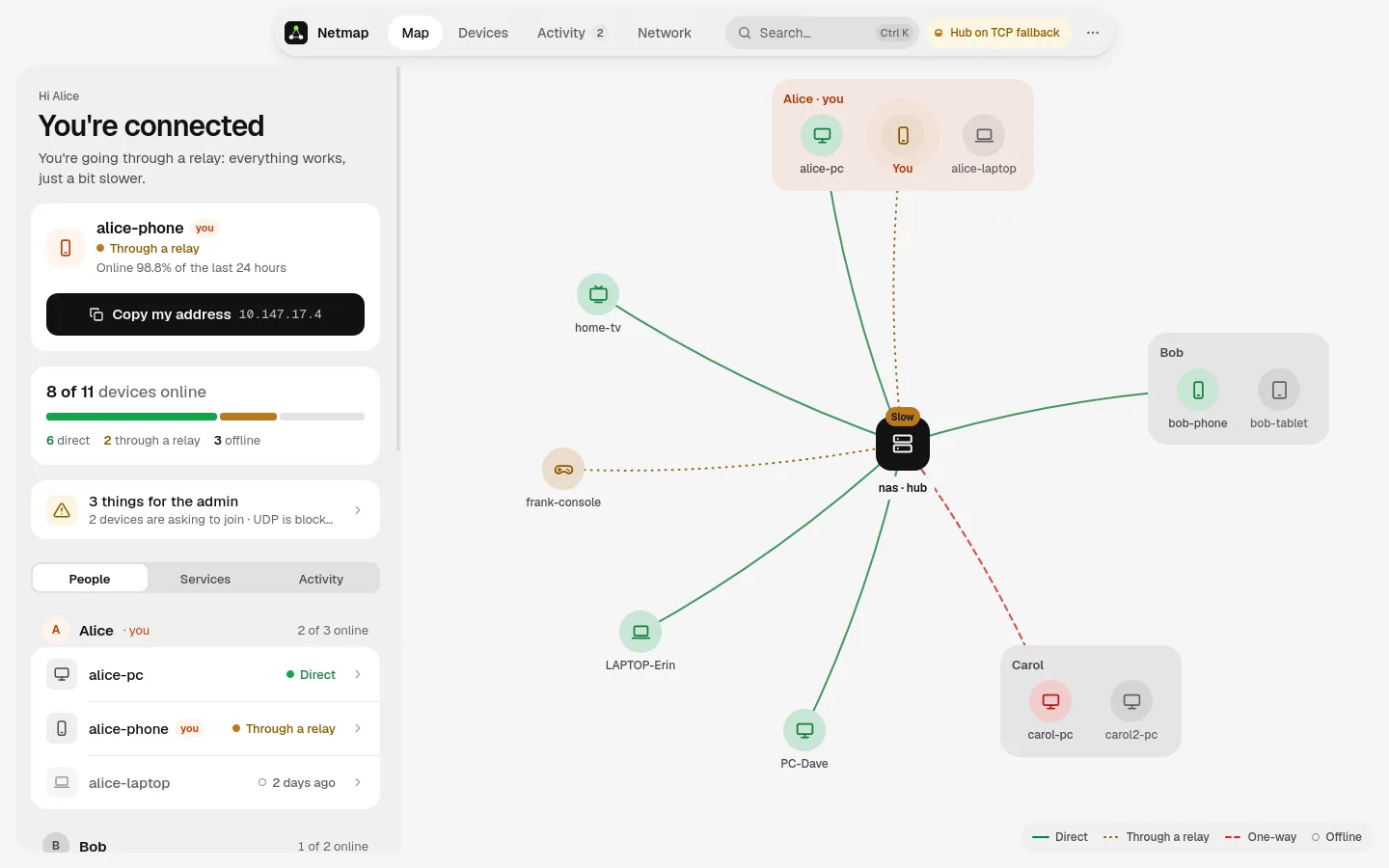
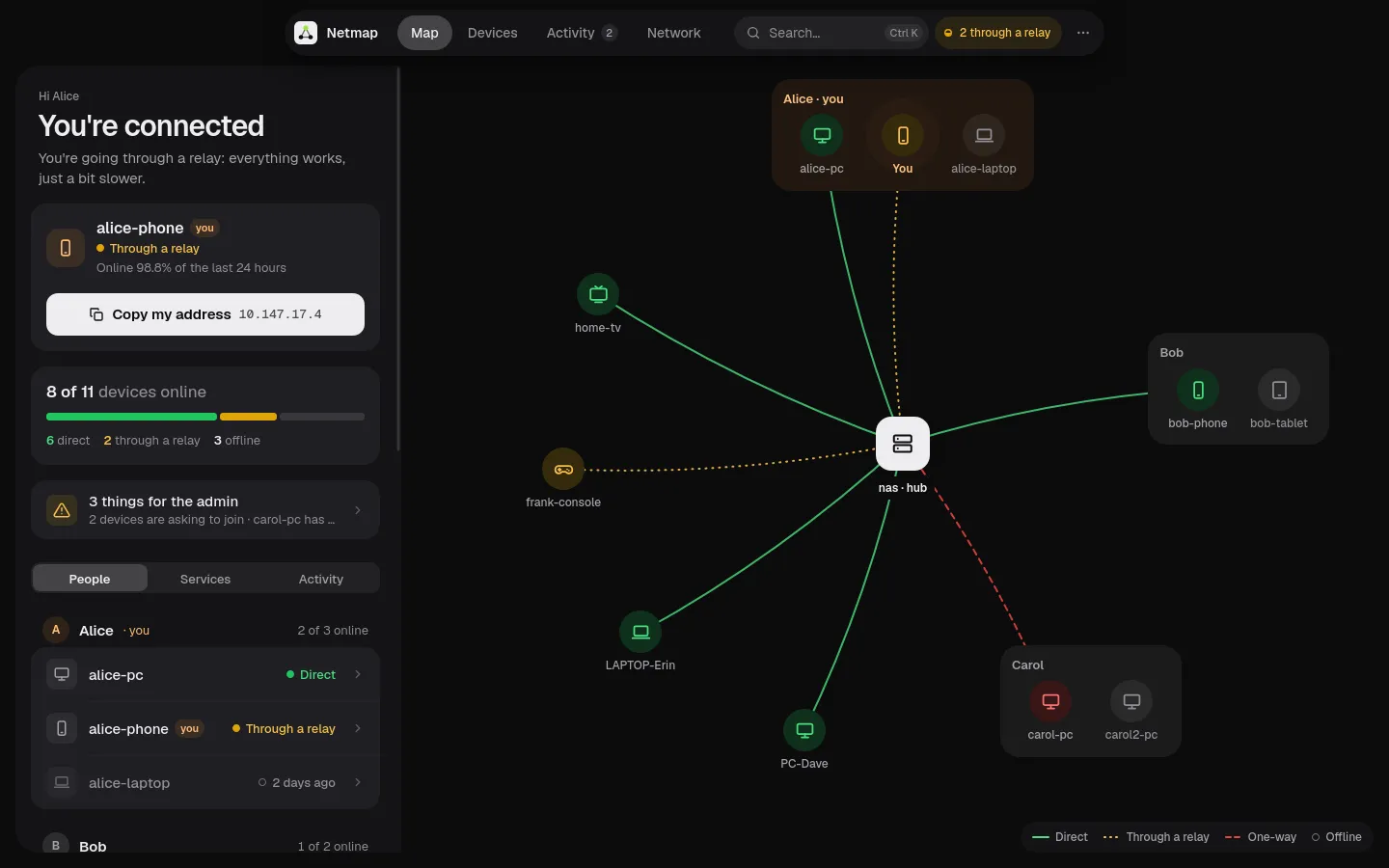
A read-only page for the members of a private ZeroTier network managed with ZTNET. It shows each member whether they are connected and how: a map of every device around the hub, direct or relayed links with their latency, 24-hour availability, what changed and when, and the services you can reach inside the network.
- GitHub stars
- 0
Why I built it
ZTNET makes a ZeroTier network easy to administer, but gives its other members no view of it. Netmap is a page every member can open from any device inside the network: it states in plain language whether the device is connected and how, directly or through a relay, with latency, IP addresses and client versions available on demand. It needs no account and cannot change the network.
Version 0.1.0 is a rewrite from scratch: a new map, a new layout and a new server.
The map
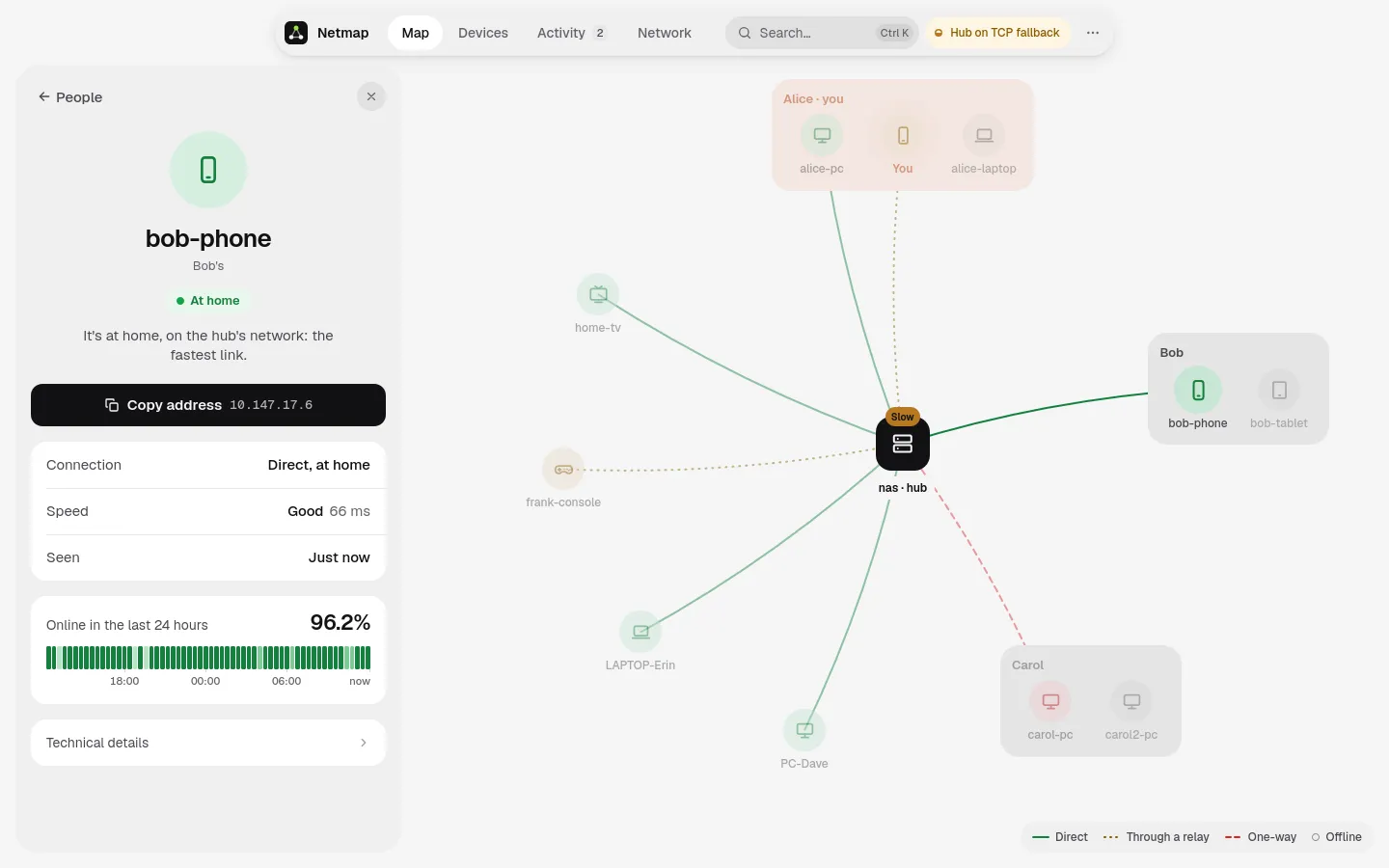
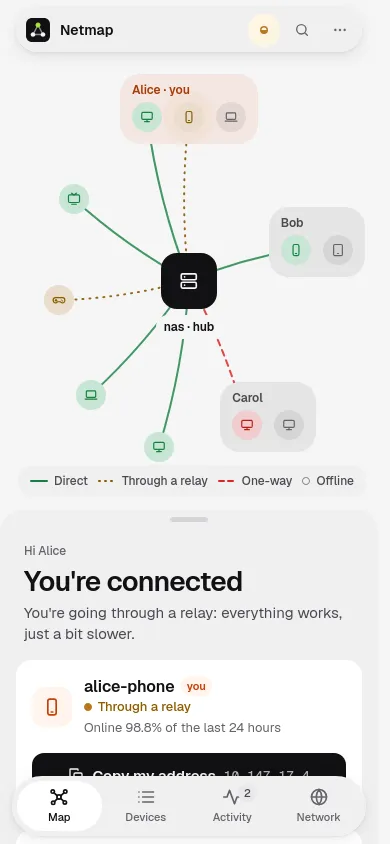
The hub sits in the middle, the viewer’s own devices are highlighted, and every person with two or more devices has an island. Each link is drawn as direct, relayed or one-way; selecting a device shows its location, link quality and availability over the last 24 hours.
Devices and history
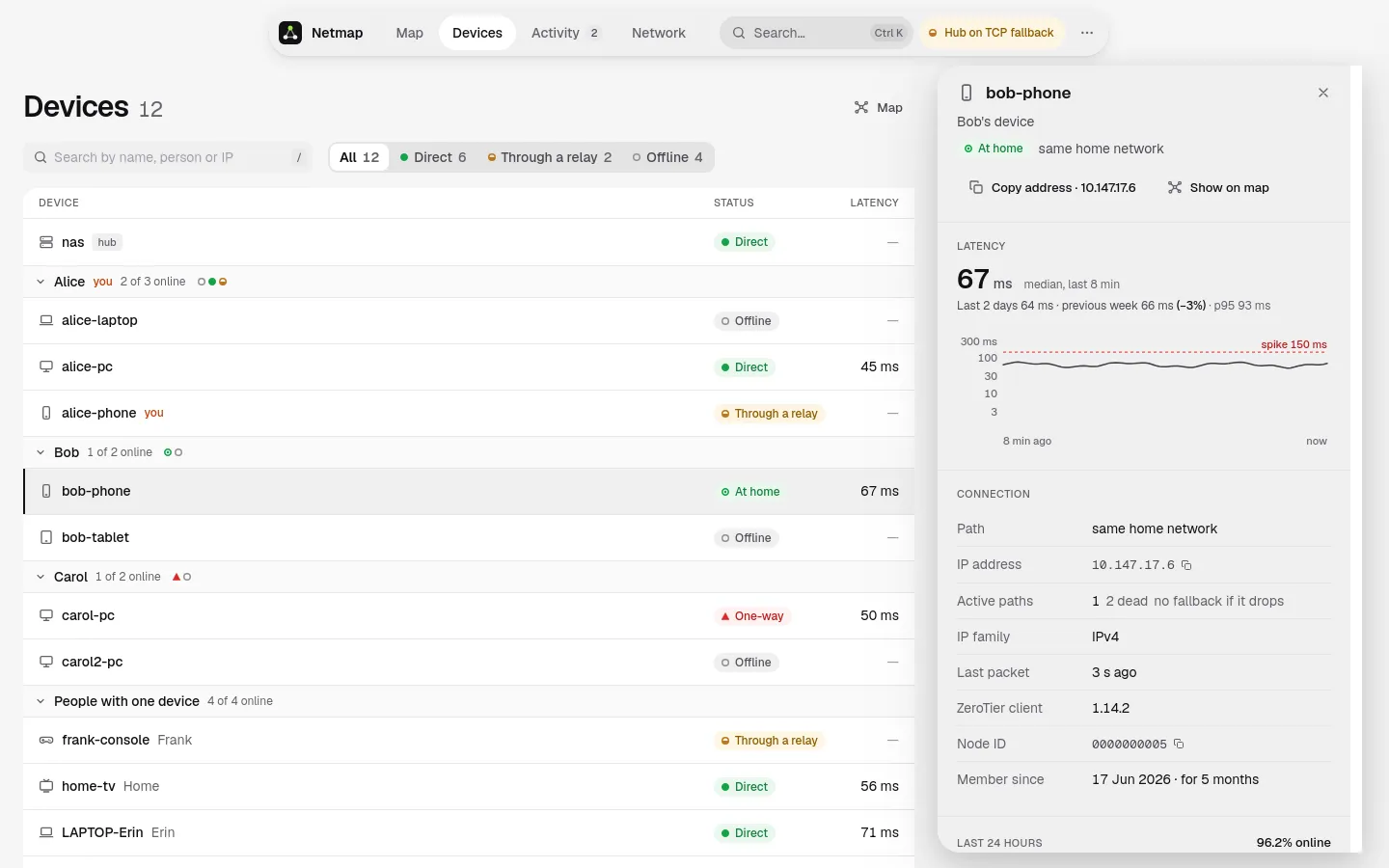
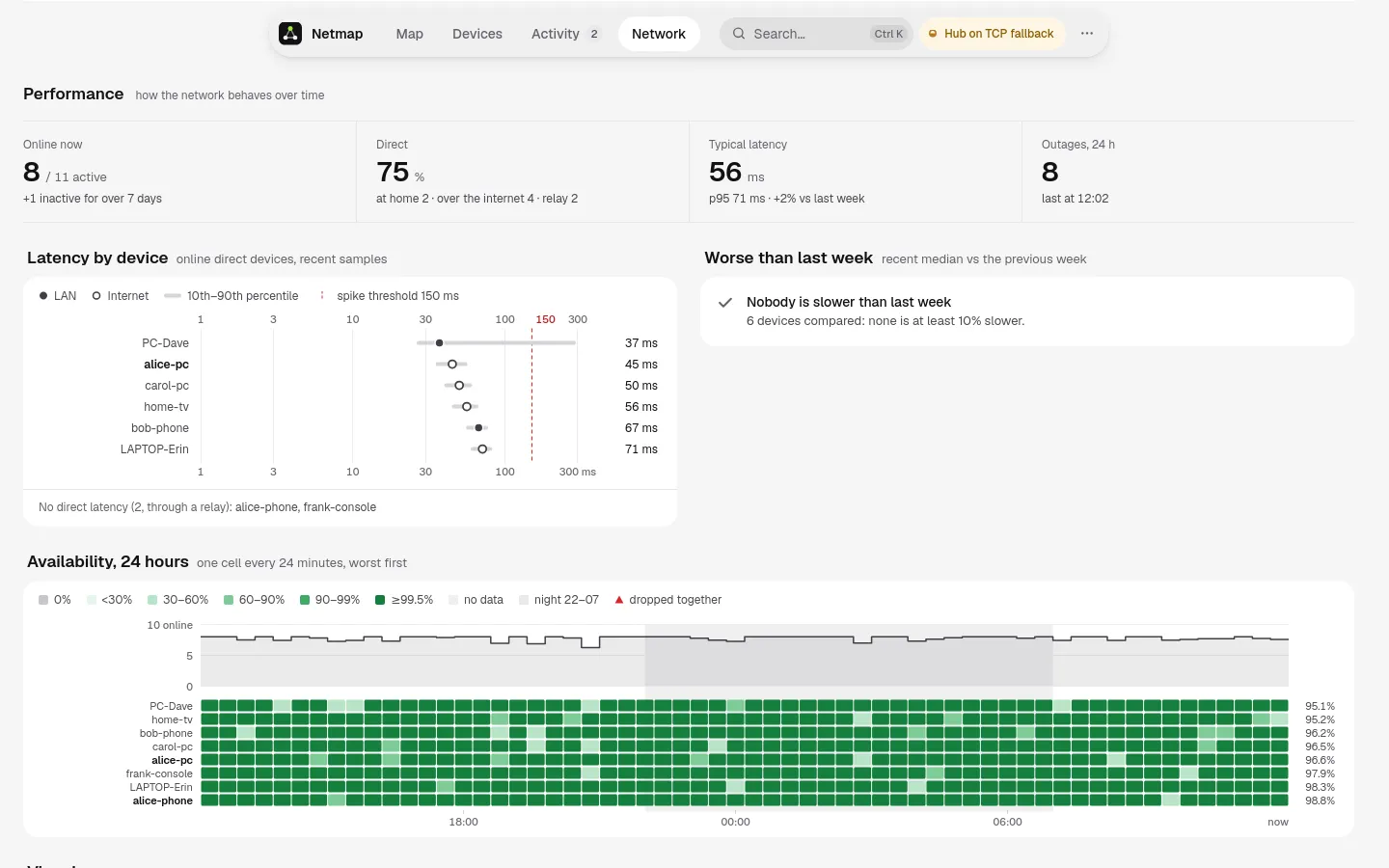
- Latency statistics: median, 95th percentile and jitter, and each device compared with itself the week before.
- Configured, received, applied: DNS, routes and addresses followed from the controller to the hub, so you see where the chain breaks.
- What changed: disconnections, path changes and latency spikes. Three devices dropping in the same poll are one incident, usually the hub’s connection, not three.
- 24-hour availability in 24-minute buckets, and a 30-day latency histogram per device. Until the history fills up, empty slots stay empty: the page never shows data it doesn’t have.
- Services directory: what you can reach inside the network, how to connect, and whether it answers right now.
How it works
A small Node.js server polls ZTNET’s REST API for the members and the network configuration, and the local
ZeroTier service for latency, path types, client versions and what reached the hub. Each poll is compared with
the previous one to produce events, and a new snapshot is pushed to every open page over Server-Sent Events.
The server is a single bundle with no node_modules, and the SvelteKit front end is static, with fonts and
libraries included, so it works with no internet access. It speaks English and Italian, on a desktop or a phone.
It runs as a container sharing the ZeroTier container’s network: it is reachable only from inside the ZeroTier network and publishes no port on the host. History survives restarts in a file written atomically.
Privacy
Everyone in the network can open the page, so the ZTNET token stays on the server, devices’ public IP addresses are used only server-side to tell LAN from internet and are never sent to the browser, and the page is read-only: authorizing members stays in ZTNET.

Next project
MineSync
Versioned Minecraft server sync for groups that host on their own PCs.